Sunday, February 27, 2011

Why you should take notice of Kyle Gibson


While Tsuyoshi Nishioka may be the center of attention among the position players in Fort Myers, pitcher Kyle Gibson is certainly gaining notoriety because of his stuff on the mound.
For the past few days, the wires have been abuzz over the hurler. Players have attested to his remarkable repertoirecoaches have fallen in love with his makeup and attitude and the on-looking media members have been wowed by all of the above. Judging from those reports, it is no small wonder why Baseball America selected Gibson as the organization’s top prospect or why they think he’s number 34 on the nation’s Top 100 list.
To me, what is really significant about Gibson’s potential and progress is that not only is he tough on same-sided opponents but he has an ability to neutralize left-handed hitters, often a difficult task for right-handed pitchers.
For example, Jason Kubel, a career .282/.343/.497 left-handed hitter against right-handed pitching, raved about Gibson’s stuff:
"He has a lot of good movement. But what really impressed me when I faced him the other day is that he keeps everything down. It sinks a lot. I don't think I saw one pitch over the knees, and I don't think I saw one over the knees the one time I went down there to face him last year. So he keeps the ball down and makes it all look the same. He makes it really tough on a hitter."
Usually, this isn’t the case. Right-handed pitchers regularly struggle with left-handed opponents as lefties typically see the ball longer and do not have to face the pitcher’s breaking stuff (pitchers are reluctant to throw sliders and curves to opposite-handed hitters). This means with more fastballs in their diets lefties tend to elevate the ball better on right-handers (and vice versa). This is why most pitchers have significant platoon splits. Gibson, however, appears not to follow that trend.
Let’s take a look into why Gibson can keep lefties from hitting him hard.
Without much available in terms of comprehensive minor league split data – at least nothing substantial since MinorLeagueSplits.com closed shop, causing this stat nerd to cry a bit – what we are left with is a sampling of his numbers versus the two groups found at MiLB.com.
Unfortunately, MiLB.com, the official site for Minor League Baseball, provides limited information regarding a pitcher’s splits. What they offer is only the player’s splits at the most recent level of baseball played. So in Gibson’s case, we are relegated to the results based on the 15.2 innings of work while with Rochester at the end of the year. What we do know is that when facing righties in the International League, Gibson carried a 1.25 groundout-to-fly out ratio. On the other hand, when taking on lefties, Gibson had a 1.50 groundout-to-flyout ratio suggesting that he was better at getting the southpaw swingers to beat his pitch into the ground.
Where the data fails us, visually, we can see how Gibson achieved those rates.
1500ESPN’s Phil Mackey, one of the biggest hustlers around the Twins camp and a must follow on Twitter, captured some very impressive footage of the big right-hander working to Joe Mauer and Justin Morneau in live batting. From the angle perched behind the catcher, Mackey gives us a unique glimpse of this spectacular movement.
The first clip is of Gibson facing Mauer. Here we see him deploy his two-seam fastball to the three-time batting champ: 

 
Gibson’s two-seamer, often referred to a sinker because of the movement, displays outstanding action. As LaVelle described on Sunday, Gibson can “throw at a lefthanded hitter's hip and watch it break toward the inside corner.” Without question, the instance above is a prime example of LaVelle’s description: As the ball leaves Gibson’s hand it appears to be heading into to Mauer’s belt but halfway home, it starts pulling back towards the plate and finishes low-and-in.
Needless to say, that is a two-seamer with some vicious movement. If a hitter attempted to put that particular pitch in play, it would likely incite a groundball to the right side or perhaps splinter his bat.
In this second clip against Morneau, Gibson tosses his change-up (his secondary pitch against lefties that Seth Stohs’ Twins Prospect Handbook 2011 notes is “above-average”):
 
Like real estate, pitching is all about location, location, location.
With the same arm action as his fastball, Gibson releases a change-up that falls away from the hitter on the outer-half of the plate, down in the zone. In the 2010 Hardball Times Annual, Dave Allen examined how pitch types and their location factor into the success of a particular pitch. What Allen’s research found was that change-ups “are generally successful on the outside edge of the plate or low in the strike zone.” With that in mind, had Morneau offered at the pitch, the likely result would not inflict any damage.
So what we can see in the two-pitch example is a microcosm of why Gibson is so effective against left-handed hitters. In addition to their outstanding movement, a left-handed hitter has to be cognizant of the inside fastball, they also have to be mindful of the change-up away – both of which Gibson has been spotting down in the zone. Given the fact that he can alternate these two pitches effectively, groundballs are manufactured.
Although the rotation is a little cramped right now however with the Twins still entertaining the notion of trading Francisco Liriano and the health concerns lingering for Scott Baker, it’s not hard to believe Gibson’s arrival to Minnesota is imminent.  

Friday, February 25, 2011

Will Cuddyer heed his own advice?


When Michael Cuddyer unveiled the team’s new t-shirts with the slogan “Don’t Be Denied”, even though his intention was to motive his teammates through the first round of the playoffs, it’s hard not to imagine that he might have been directing that message at himself too.
A year ago at spring camp, Harmon Killebrew was calling him one of the most powerful hitters on the roster. Considering Cuddyer had just come off of a campaign of hitting 32 home runs, launching 13 of those as “No Doubters which left little question that they would have been out at every ballpark league-wide, it’s not hard to see why Killebrew liked Cuddyer’s power so much. Despite the Killer’s confidence, Cuddyer’s total dissipated to a mere 14 home runs, touching only four of those for No Doubters.
This raised plenty of questions as to where the power had gone.
David Pinto of BaseballAnalytics.org recently took the opportunity to look at the difference between the two seasons and found little variance in opposing pitchers approach to Cuddyer. What his research revealed was a sizeable decrease in power generated from pitches in the middle of the zone.
Inside Edge’s data confirms this. In 2009, Cuddyer exercised a .218 well-hit average on his swing on pitches in the middle of the zone (vertical), considerably better than the league-average of .179. This wound up being the 16th-highest total in baseball that year. That rating would fall precipitously this past year as he posted a .176 well-hit average on his swings for pitches in the middle of the zone, falling all the way to 91st.
If pitchers were not approaching him differently, why did Cuddyer suddenly become anemic to pitches down the heart of the plate? While it is easy to blame the influences of the new stadium, but as Pinto pointed out Cuddyer’s power vanished on the road as well. More likely, the culprit in the case of the missing power can be traced back to his sore knee.
As I mentioned in October a sore right knee could impact his mechanics - certainly causing one to shift weight off of the back leg much sooner than desired in efforts to protect said knee and resulting a diminished capacity to drive the ball. Analyzing his batted ball numbers for the season, we see that as the year progressed, so too did his groundball tendencies. Without being able to lift the ball off the ground, it’s extremely difficult to hit a home run.   
Along the same lines, the knee also likely impeded his ability to pull the ball with authority. Two years ago, when Cuddyer muscled out 32 home runs, he did so because of his ability to turn on the ball with sheer brute force. That year, he amassed a .816 slugging percentage when pulling the pitch to left while dropping off 24 of those 32 home runs into the left field bleachers. This past season, his slugging percentage when pulling the ball dropped to .564 – his lowest total since his injured season of ’08.
Part of the reason the numbers decreased so much was because Cuddyer did not elevate the ball to left field as well as he did in the past:
 
Cuddyer’s batted balls/slugging to left field
 
GB%
SLG%
2010
68.6%
.564
2009
56.5%
.816
2008*
64.3%
.500
2007
58.2%
.692
2006
56.2%
.667
 
Cuddyer’s 68.6% groundball rate rates among the league’s more elite slap-hitting, speed machines. The only power hitter to record a higher groundball rate when pulling the ball was the Yankees’ Alex Rodriguez. What A-Rod lacked in pull power, he made up for fishing in dead center as he tagged 12 of his home runs in that direction.
While it is still early in the spring, there are already signs that Cuddyer’s knee may be healing. According to one report, Cuddyer was putting on a display in batting practice, purportedly launching shots far over the left field fence – not unlike his performance in 2009. However, keep in mind spring training is often like being sent to celebrity rehab, many players make strides only to relapse later on.
In order to be successful, Cuddyer needs to regain that edge for turning on a pitch and putting some air beneath it. Not only because Target Field is unforgiving to hitters heading towards center and right-center, but because he has proven he can make pitchers regret working middle-in.

Monday, February 21, 2011

OtB Twins Notes


LaVelle Neal informs us that Justin Morneau, who reported to spring training on Monday, is ready to participant in the team activities but still is not 100%.
While the majority of us would be satisfied with simply having Morneau back on the field by Opening Day, Fangraphs.com’s Jeff Zimmerman collected some research on the 50 players who have returned from the disabled list after a concussion and reviewed their pre-concussion and post-concussion performance.

Zimmerman’s research revealed a notable drop-off in offensive performance – especially in the on-base percentage and slugging categories.

Because the data pool is extremely small, it’s hard to know whether these findings are really indicative of a post-concussion performance. Furthermore, we don’t know if the drop-off incurred was due to the concussion or the time off. After all, any player who spends 60 days away from baseball-related activity will likely experience the same sort of regression. Given Morneau’s description of his symptoms – including fogginess – you can see how one’s on-base percentage may drop when attempting to judge a strike zone through a haze or trying to get a beat on a mind-bending curveball.

In Morneau’s case, back in 2005 when he took a Ron Villone fastball to the dome, he came back strong, hitting .265/.333/.500 in his first 60 games upon his return but finished what turned out to be his worst season as a major leaguer. After missing 81 games last year - in addition to the time off this winter from baseball-related activities - you have to wonder if Morneau is in going to witness a significant drop-off once he returns to action in 2011.
Neal also notes that Scott Baker spent time throwing in the bullpen with little discomfort – only when tossing his changeup.
To me, I do not think Baker is out of the woods for concern over his arm but this is some good news after the initial reports. Baker doesn’t typically use his changeup that often – throwing it 7.5% of the time, mostly to left-handers. On top of that, it is one of his least successful pitches, amassing a career -1.9 runs above average with it and according to Inside Edge, over the last two years, opponents have hit .320 off of his change.

As I noted in the beginning of February, getting Baker healthy again so he can regain the arm angle he dropped in 2010 will likely led to fewer pitches that run astray on him as they did last year.  
The Pioneer Press’s John Shipley tracked down hitting coach, Joe Vavra, and picked his brain regarding Tsuyoshi Nishioka’s swing mechanics. Vavra’s response? It looks good.
Said Vavra:
“I've seen enough on the highlight films and the YouTube and the various different media outlets to know that he's a pretty good hitter. He gets his hands inside the ball well, is able to spray the ball, and it looks like he's able to rotate the ball and drive it."
I’ve taken a couple opportunities to talk about Nishioka’s mechanics this winter and essentially have concluded the same as Vavra. Another interesting nugget provided in the same article was that the Twins do not have their left-handed batting practice arm in camp yet so Nishioka took all his swings from the left-side of the plate.

1500ESPN.com’s Phil Mackey caught up with reliever Anthony Slama who said that he has added a cutter to his repertoire this off-season in efforts to subdue left-handed opponents.

The 27-year-old Slama is a pitcher that appears to be on the cusp of breaking into a full-time relief role. In his four seasons in the Twins organization since being drafted in ’06, Slama has put up attractive numbers working as a closer. In his 249 innings of work, he’s whiffed 345 while producing a 0.4 HR/9 career average leading to a 1.95 ERA. However, while dominant against his right-handed competition, lefties have has some level of success when facing him. Last year in Rochester, righties were limited to a .130 average against with a 2.94 K/BB ratio while lefties hit .242 with a 1.60 K/BB ratio.
Remarked Slama about the cutter:
"That'll be a good pitch for me. I kind of struggled a little bit against lefties. The changeup is a bit of a take pitch for them because they see it early. And typically it'll kind of dive away from them. That's what I'm trying to get groundballs on, and a changeup isn't really a groundball pitch. So I'm hoping a cutter will kind of offset that and give me something to move in the other direction so that the changeup will be nastier."
In his short exposure last year with the Twins, Slama faced twelve lefties, allowing six of them to put the ball in play. Every one of those had elevation as he induced zero grounders.

Reviewing Slama’s limited pitch f/x data on his 4.2 innings at the major league level last year, we see that Slama used his four-seamer/two-seamer combination along with his changeup on the outer-half of the plate which moves away from lefties. Without much available to keep these opponents from diving out over the plate on those pitches, Slama clearly needed another weapon that he could go inside with to keep them honest. If effective, the cutter should then keep lefties from getting solid wood on the change-up, instead beating those into the turf more regularly.   

Mackey’s cohort down in Fort Myers, Tom Pelissero, uploaded a video of the contrast between Joe Nathan and fireballer Jim Hoey while going through their bullpen sessions.
Yup, the ball explodes out of Hoey’s hand. In 2007, Hoey was averaging 95.7-mph for the Orioles while flirting with triple-digits in the minors. Of course, what the clip didn’t show is where the pitched ended up. He’s got the heat but he’s got the wildness too.

I maintain the prediction I made back in January that Hoey has the potential of being a major contributor out of the bullpen this year – provided he harnesses his command and stays healthy. 

Charley Walters, in his infamous ‘Don’t Print That’ section of his column, hints that the Twins are not interested in keeping Danny Valencia long-term.
Since he’s cheap at least through 2012 when Valencia will likely enter his arbitration years, I’m assuming this issue doesn’t mean the Twins will trade him, just progress year-to-year with him until he becomes expensive.

While Valencia emerged as a strong presence at third base – rocking left-handed pitching and fielding his position far better than what had been anticipated – his 322 plate appearances likely do not reflect what his results would be when given a full season. I anticipate some decline in his numbers in 2011 as opponents start to pick through his soft-spots in his swing but expecting his totals to come close to his minor league career rate isn’t farfetched (.298/.353/.469) as he hits breaking pitches extremely well while hitting the ball to the big part of the field often.
Joe Mauer, cover boy for the second consecutive year of MLB: The Show, told reporters that he and some of his teammates actually use the video game as a method for scouting some of their rivals.
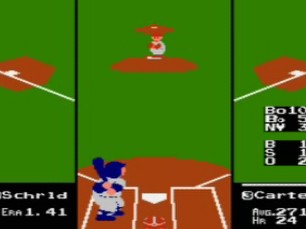
You kind of wonder if that sort of a statement is actually part of his duties as the game’s chief spokesman or if the genuinely flip on the game for on-field insight. At the very least, it is infinitely superior to those of Nintendo’s RBI Baseball. Mauer said that the details within the game – specifically, hand placement – is spot-on.  
With scouting companies like Inside Edge, who contributed their stats package to Major League Baseball 2K10, you can see how there is something to be learned from today’s modern games but while this sort of information could be useful in some capacity, accessing video footage of those players should be the preferred method for accurate information.

Friday, February 18, 2011

Is Tsuyoshi the next Ichiro?


While doing considerable amount of research on Tsuyoshi Nishioka for the Maple Street Press Twins Annual 2011, I was taken aback at the amount of references I would find that attempted to compare him to Ichiro Suzuki. 
In one such example, back in November prior to the Twins winning the bidding process, Yahoo.com’s Big League Stew editor, Kevin Kudak, wondered if we might see the next Ichiro in Tsuyoshi and even went so far as to describe the soon-to-be Twin saying he “smack[s] the ball with a similar swing that Ichiro has already made iconic in the states.”
In my due diligence in December after the Twins signed Tsuyoshi, I reported on a hitter that showed really no characteristics of being like Ichiro – besides being of the same nationality. You might say that they share a similar initial leg kick but everything mechanical deviates from there.
So when Nishioka arrived in Fort Myers, and several area beat writersand columnists admitted those that were on-hand to witness his batting session at the cage  were surprised to find out that Nishioka’s swing doesn’t resemble Ichiro’s swing much at all, I wasn’t at all surprised. That’s because Nishioka’s swing parallel’s Joe Mauer’s - as one intrepid reporter correctly pointed out -  at least, much more so than it does Ichiro’s considering the two Japanese born hitters share two distinctly different mechanical styles.
Ichiro’s swing, seen below, is one of the few successful modern players to implement a linear approach (admittedly, his is probably more of a hybrid but his foundation is in the linear approach):  
via MLB.com


Linear mechanics is usually geared towards high-contact, singles-type hitters, something that was prolific in the dead-ball era of baseball. What happens in linear hitters is that when the front foot plants, their weight continues moving forward during the swing. The actual swing becomes more hands-and-arms, pulling the bat through the hitting zone.
Watch Ichiro’s hips and you will notice that once he plants his front foot that his backside continues to follow him through his swing and he pulls the bat through (to his credit, he actually slaps the ball fairly well and with plenty of juice behind it). This method has provided him with an extremely high contract rate as since ’06, which has been one of the best in baseball at 89.2% in that duration. Likewise, it also helps him keep a lot of his batted balls on the ground, maintaining a 55.5% groundball rate since ’06, using his foot speed to beat out plenty of infield hits (228 to be exact, 100 more than the runner-up, Derek Jeter). Needless to say, this approach has been wildly successful for Ichiro.
Meanwhile, in Tsuyoshi’s swing, you will see something that reflects more of the rotational approach: 

In the simplest terms, the rotational approach is when a hitter plants his front foot and the weight shift stops forward movement as the hips and arms rotate during the swing. In today’s game, this is the most commonly used approach, typically equating to more power generation and hitting the ball hard. Watch Tsuyoshi’s mechanics and you see plenty of rotational hitting traits in his swing. At the point of plantation, his forward progress is interrupted as he unleashes his swing, rotating in place, and loops the bat rather than pulling it straight through the zone.
Does this mean that Tsuyoshi’s going to hit like Mauer once the season begins? Not in the least.
While they share several attributes – including keeping their weight back well - there are plenty of differences. For starters, Mauer has a much more finished swing that wraps around while Nishioka cuts his off. Along the same lines, Mauer’s stature will give him a better ability to leverage his swing for power. 
To many of us, Tsuyoshi is currently an enigma, wrapped in mystery and smothered in secret sauce.  What we can say with some certainty is that he is not going to be the next Ichiro, at least not in his approach at the plate.  While those with cable will learn more about his style in the coming months but if you want to get a jump on the others, I highly recommend ordering a copy of the Maple Street Press Twins Annual 2011 and read the extensive, in-depth analysis on what to expect from Tsuyoshi.


Thursday, February 17, 2011

Again with the bunting...


I like Ron Gardenhire as a manager, I really do.


For starters, he seems to carry with him the immeasurable intangible of keeping his team motivated and focused over the long-haul of a 162-game schedule. After the announcement of his recognition of AL Manager of the Year but before the state’s dedicated Ron Gardenhire Day, Jim Thome offered this regarding the Twins skipper:

"I think he's done a great job of handling his players, and I think to be a good manager, that's key. You have to know each personality, and he does that. I think he knows everybody from top to bottom, and he does a great job with the on-field stuff, too. ... I've had good ones, and he's right up there, definitely, at the top of the list. It's definitely been a pleasure to play for him, that's for sure."

He sticks up for his players, both on the field and to the press. Over the course of his tenure with the Twins, Gardenhire has led the team to 803 victories, outperforming their Pythagorean wins estimate by 21 games in nine years. In fact, Gardenhire’s teams have underperformed their Pythagorean record only three times since his promotion and even then, each season it has been a difference of one win. Perhaps cultivating this type of clubhouse environment is the reason for doing better than the projections suggest they should.  

For that, he should win the Manager of the Year.

Plus the fact that he seems to share the same eating habits as Parks & Rec’s Ron Swanson. You have to respect that.

Still, if there is one thing that irks me about the manager - albeit a small, insignificant issue for me – is his stubborn insistence of maintaining a pre-1990s lineup construction mentality.
In a recent interview with the Pioneer Press’s John Shipley, the beat writer inquired what the manager would do with his lineup if neither Tsuyoshi Nishioka nor Alexi Casilla is capable of handling the number two spot in the order – would Gardenhire be so bold as to move Joe Mauer to that spot?

Gardenhire’s response was:
“Everybody talks about that, and yeah, I would. In fact, I have, and it wasn't the greatest.
Now, the scale of judgment on what represents greatness may be up for discussion, however, it’s hard not to deduce that Mauer’s time in the No. 2 spot has been anything but the greatest.

The authors of The Book: Playing The Percentages in Baseball – Tom Tango, Mitchel Lichtman and Andrew Dophin – found that the optimal two-hitter was someone who was a high-OBP guy and that the No. 2 hitter came up to bat in situations as important as the No. 3 hitter, only more often throughout a season.

For his entire career, Mauer has assumed the second position 284 times – the bulk of which happened in 2009 the year in which the two-spot was a nightmarish, revolving door of misfits. In his limited capacity of batting second, Mauer hit .398/.451/.707 in 142 plate appearances. He drove in 28 runs while scoring another 29 on his own in 33 games. Additionally, he did not ground into a single double-play in that time.

Gardy continued to say that:
“You got to understand, the No. 2 batter gives himself up all the time. If the leadoff hitter is on, we want him to hit a grounder to second and move the guy over. How many times do you want Joe walking to the plate expected to get the guy over? It happens; it's part of the game. But the second hitter is a bunt guy, really.
I’ve got several problems with that statement. The first of which being Gardy’s testament that the ideal No. 2 batter should be “giving himself up all the time.”

In the TwinsCentric 2009 Offseason GM Handbook and after the Twins signed Orlando Hudson last February I lamented the importance of having a strong offensive presence in the two-spot and NOT give yourself up. Once again to explain the significance of having a strong offensive presence batting second, I’m going to borrow from the write-up:
“In 1986, Bill James constructed a poignant analysis on lineup composition and revealed that the total runs scored and second spot in the batting order had the strongest correlation among any player in the lineup -- more than leadoff, third or cleanup.  Mr. James noted in his 1986 Baseball Abstract that ‘many managers tend to waste the second spot in the order by putting somebody there who isn’t one of the better hitters on the team...Too many managers will say ‘bat control’ as if these words were a magic wand, and place some .260 hitter with a secondary average of .150 batting second…’
 What Mr. James was trying to convey was that a sizable portion of baseball managers were submitting lineups that 1) had an excellent on-base oriented leadoff hitter, followed by a guy that 2) would slap the ball the other way or lay down a bunt thereby advancing the runner but surrendering an out, followed by 3) the team’s best hitter. Conceding the out was not advantageous for an offense. His solution to create an optimal lineup, one would want to enlist as many hitters in a row that avoid making outs – regardless of the out’s so-called productivity.” 
Bottom-line: Let’s not give away outs, it’s bad for business.

Secondly, moving the runner over is well-and-good, however, it’s better to put TWO runners on-base for the No. 3 and No. 4 hitters. Clearly, as a .327 hitter with a robust .407 on-base percentage, Mauer would do just fine getting on base as well as moving the lead-off hitter around the bases. In fact, it’s more likely that Mauer would do better under these conditions than some of the other options. When Mauer pulled the ball last year, he pulled it on the ground 79% of the time last year. With an opening between first base (since the first baseman would be holding the runner) and the second baseman inching over towards second to play for the double-play, Mauer should be given a larger target toward right to shoot a ball through.  

Critics of Mauer’s shift to the two spot would suggest that he would be set-up for more opportunities to ground into a double-play. This, too, is simply untrue.

Once again, research by The Book found that the No. 2 hitter comes to the plate in a double-play situation .09 times a game. Conversely, the No. 3 hitter hits under a double-play situation .18 times a game – nearly twice that of a No. 2 hitter. Extrapolating this over the course of a 162-game schedule, the No. 2 spot comes to bat an average of 14.58 times with a double-play in order. Meanwhile, the No. 3 hitter comes up 29.16 times over the course of a season. Again, while the difference may be negligible, but the decision to use a groundball-oriented hitter in the No. 3 spot (Mauer’s 49.5% career groundball rate) may be worth at least a win in the overall record.

The underlying message from Gardenhire was that he wanted more “team speed” this offseason, but what he may have been requesting was someone who was more skilled at bunting. Hudson’s strong OBP history and little record of dropping down sacrifices in his nine year career combined with leadoff Denard Span’s decrease in OBP left Gardenhire without bunter or bunt situations. Because of this, his team executed only 38 sacrifices all season – his No. 2 hitter laid down 10 of those. The previous season, the one with misfits and Mauer, the No. 2 spot dropped five bunts. Prior to that, an Alexi Casilla-led assortment of No. 2 hitters sacrificed 20 times in 2008. In my opinion, Gardy’s need for speed is also a euphemism for getting back to that ’08 type of play that.   

Although, he may fit the new two-hitter philosophy, I can concede that Mauer may not be the right choice to bat second. After all, having Orlando Hudson there last year added depth to the lineup and gave the Twins a strong offensive presence for five out of the six months (hitting .284/.358/.402 from April through August). Still, if the difference is having Mauer bat second versus insert a bunt-happy, groundball machine directed to record an out in the sake of “advancing the runner” – I’m taking Joe all day, every day.  

Again, lineup construction can wind up being a minor contribution – maybe costing or benefiting the team a win or three overall – yet for a team that has to play within the margins of what could be a very competitive run against the Chicago White Sox and Detroit Tigers, that win or three could be very significant this year.